Biography · 1906–1990
Phil Dike
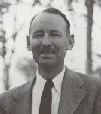
Philip Latimer Dike (1906 to 1990) was a California painter and teacher, and one of the central figures of the California watercolor movement. His work moved from lively beach and harbor scenes in the 1930s to near abstraction by the 1970s, with the sea as its subject throughout.
Redlands and Chouinard
Dike was born in Redlands, California, in 1906 and grew up there. He won a scholarship to the Chouinard Art Institute in Los Angeles, which one source dates to 1923 and the Laguna Art Museum dates to a course of study from 1924 to 1927. His teachers there included F. Tolles Chamberlin and Clarence Hinkle. At Chouinard he met Millard Sheets, who became a lifelong friend, and the two later belonged to the California Water Color Society together.
New York and France
In 1929 Dike went to New York to study at the Art Students League with George Bridgman and Frank Vincent DuMond, and he worked in the studio of George Luks. He exhibited with the New York Water Color Club. A review of the Laguna Art Museum retrospective recounts that he soon found Luks's work too dark, and that DuMond taught him to look for an imagined glowing rainbow over each landscape.
Back in Los Angeles he taught at Chouinard for a year, then went to France to study at the American Academy at Fontainebleau. He resumed teaching at Chouinard in 1931, and he was among the first artists to develop what became known as the California Style of watercolor.
Disney, the regionalists and California Holiday
From 1935 to 1945 Dike worked at Walt Disney Studios as a color coordinator and story designer, and he taught art and color theory there. Among the films he worked on were Snow White and the Seven Dwarfs, Fantasia and The Three Caballeros. He kept painting and exhibiting throughout, and in 1938 he was president of the California Water Color Society.
With a training grounded in realism, he was a prominent member of the California regionalist movement of the 1930s and 1940s. Busy beach and harbor scenes dominated his work in those years. One of the best known is California Holiday, painted from watercolor sketches he made on a Labor Day at the entrance to Newport Harbor, and published in Life magazine in September 1941. The Laguna Art Museum published a catalogue titled California Holiday: The E. Gene Crain Collection in 2002.
After the war: teaching and the summer school
After World War II Dike left Disney and returned to teaching and painting full time. During the regular school year he taught at Chouinard, and in 1947 he and Rex Brandt founded the Brandt-Dike Summer School of Painting in Corona del Mar. In the 1940s he began to leave strict realism behind. His watercolors took on a more modern look, with inventive calligraphy and geometric, abstract ideas worked into the compositions.
Scripps, Claremont and Cambria
In 1950 Dike joined the faculty of Scripps College and the Claremont Graduate Schools, and he taught there until he retired in 1970 as professor emeritus. He lived in Claremont and painted at Balboa Bay, and he built a second home and studio in Cambria on the central California coast. The harbors, driftwood, figures on the beach and rugged rock formations of that coast fed a long run of bold, semi-abstract watercolors.
By the late 1960s his work had reached almost pure abstraction, though the sea remained his subject. In the 1970s the human figures shrank to mystical shapes, and sky, sea and sand became striated, textured patterns. These pictures are known as his Wave series and are described by the Laguna Art Museum as his mature style. Wave Echo (1972) is one example. In his last decades he also wrote poetry about the sea. He died in 1990.
Honors and memberships
Dike was a member of the National Academy of Design, the American Watercolor Society, the Philadelphia Water Color Club and the California Water Color Society. He is remembered as a thoughtful, caring teacher who inspired many artists who came out of Scripps and Claremont, and as one of the main innovators of the California watercolor movement.
Exhibitions and museum collections
In 2017 the Laguna Art Museum presented Phil Dike: At the Edge of the Sea (June 25 to September 24), curated by Janet Blake. It brought together more than sixty works from the 1920s to the early 1980s, drawn from public and private collections around California, and it was the first comprehensive museum exhibition of his work in over forty years.
The Metropolitan Museum of Art holds his 1936 watercolor over graphite, Old Domingo Mine. The Smithsonian American Art Museum has Elysian Park, Los Angeles, a 1933 oil on board.
Timeline
This biography draws on museum exhibition pages and catalogues, the Archives of American Art, and published biographical dictionaries. Where accounts disagree, I say so.
Own a Phil Dike painting?
Snap a few photos with your phone and send them. I'll reply personally, and there's no obligation.
Get an offer Call or text (760) 943-8706